
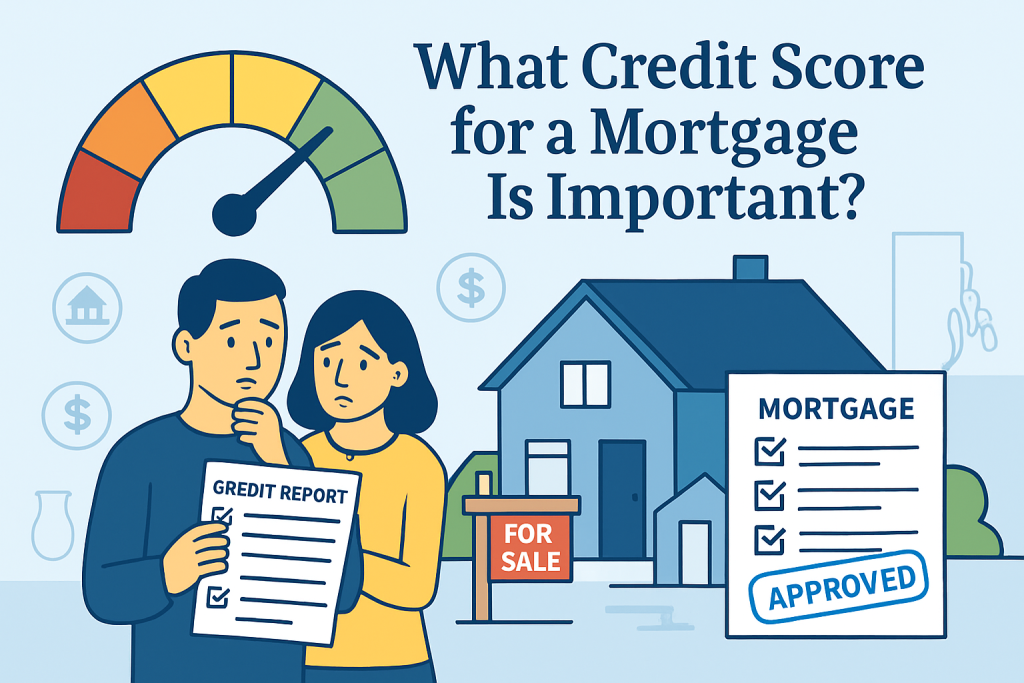
When people start thinking about buying a house, one of the first questions that comes up is simple: What credit score for a mortgage is important?
It’s an important question because your credit score is the key that either opens the door to approval—or slams it shut. And here’s the thing: the number you need isn’t the same for everyone. It depends on the loan program, the broker, and even your overall financial picture.
So, let’s break this down carefully. By the end, you’ll not only understand the role of your credit score in mortgage approval but also learn how different loan options in Rhode Island make the path easier or harder. And with guidance from RI Mortgage Brokers, you’ll see how to position yourself for success no matter where you’re starting.
Why Credit Scores Matter in Mortgage Approval
Before we dig into numbers, let’s answer this: why do brokers care about your credit score for mortgage approval in the first place?
The short answer: risk. A credit score tells the broker how reliably you’ve handled debt in the past. High scores signal responsibility. Low scores raise red flags.
Here’s the big takeaway: brokers don’t just look at your income or savings. They want proof that you’ve borrowed money before and paid it back. Your credit score for mortgage approval is essentially your financial report card.
What Credit Score Do You Need For A Conventional Mortgage?
Now, let’s get specific. For conventional mortgages—the ones not backed by the government—you typically need a credit score for mortgage approval of at least 620.
That’s the baseline. Some brokers may even ask for higher, especially if you don’t have a big down payment. For the best interest rates? You’ll want to aim for 740 or above. That’s the sweet spot where borrowers get the lowest costs
But here’s the catch: if you’re stuck below 620, conventional mortgages become much harder to get. It is where FHA, VA, or other programs step in with more flexible rules.
FHA Loans: More Flexible Credit Score Requirements
Here’s some good news. If your credit score for mortgage approval isn’t perfect, FHA loans may give you breathing room.
The Federal Housing Administration allows scores as low as 580 if you’re putting down 3.5%. Even better, if you can put down 10%, you may qualify with a score as low as 500.
That’s a huge difference compared to conventional loans. And in Rhode Island, many first-time buyers lean on FHA programs to get their start.
For more details, you can check out: Who pays closing costs on an FHA loan?. A common question that ties directly to affordability.
VA Loans: A Strong Option for Veterans and Service Members
If you’re a veteran or active-duty service member, VA loans are one of the best deals out there. Here’s why:
- The VA itself sets no official minimum credit score.
- Most brokers still want to see at least a 580–620 credit score for mortgage approval.
- You don’t need a down payment.
- Interest rates are typically lower.
In practice, this means VA loans are more forgiving than conventional options. So, if your score isn’t perfect, you may still qualify.
And if you’re wondering about financing, here’s a detailed guide: Are VA loans 100% financing?.
USDA Loans: Another Zero-Down Option
Don’t qualify for VA? If you’re looking in eligible rural or suburban areas of Rhode Island, USDA loans may be another option.
The required credit score for mortgage approval usually starts at 640. While not as flexible as FHA, it still opens the door for many buyers who can’t hit the 700+ range yet.
Plus, USDA loans offer zero down payment—making them a real contender if your income fits the program’s limits.
Why 700+ Still Matters
Now, you may be wondering: “If I can already qualify for a mortgage with a 580 or 620, why would I push myself to aim for a 700 or higher?” It’s a fair question, but here’s the key difference: approval and cost are not the same thing. Getting approved at a lower score might open the door, but the price you’ll pay over the life of the loan is where things really change.
-
Approval vs. Affordability
Let’s break it down. A 620 credit score might be enough to get you in the door, but brokers will likely see you as a higher risk. That risk translates into higher interest rates, which means you’ll pay more every single month. On the flip side, a 700+ score shows stability and reliability, so brokers reward you with lower interest rates and better loan terms. In short, you may qualify either way, but the cost difference can be massive.
-
The Real Numbers Behind the Savings
Here’s a practical example. Imagine two buyers applying for the same mortgage. Buyer A has a 620 score and is offered a 7% rate. Buyer B has a 740 score and secures a 6% rate. At first glance, 1% doesn’t sound like a huge difference. But when you stretch that out over a 30-year loan, the savings are staggering, easily tens of thousands of dollars. And that’s money you could put toward home improvements, savings, or even paying off your loan early.
Factors Beyond Credit Score That Brokers Check
Here’s something important to understand: your credit score for mortgage approval isn’t the only piece of the puzzle. Brokers also check:
- Income stability – Do you earn enough, and is your job consistent?
- Debt-to-income ratio (DTI) – How much of your income already goes to debt?
- Down payment – Are you bringing money to the table?
- Property type – Is the home in good condition and worth the price?
So even if your credit score isn’t perfect, strong numbers in these other areas can help balance things out.
Rhode Island Example: Credit Score in Action
Let’s put this into perspective with a Rhode Island example.
- Borrower A: Credit score 580, applying for an FHA loan with 3.5% down. They may qualify.
- Borrower B: Credit score 640, applying for a conventional with 5% down. Approval is likely, though not guaranteed.
- Borrower C: Credit score 740, applying for a conventional with 20% down. They’ll almost certainly get approved—and at the best rates.
It shows why knowing your credit score for mortgage approval early is critical. The difference between 580 and 740 isn’t just numbers—it’s buying power, cost, and peace of mind.
Improving Your Credit Score for Mortgage Approval
If your score isn’t where you want it to be, don’t panic. The truth is, most people can improve their credit with the right steps and a little patience. And the earlier you start, the easier the mortgage process becomes later. So, let’s walk through a few practical strategies that really work.
-
Pay on Time Every Month
First and most importantly, always pay your bills on time. Even a single late payment can drop your score significantly, and unfortunately, that damage can stick around for years. Think of your payment history as the backbone of your credit score.
The more consistent you are, the stronger that backbone becomes. On the other hand, if you fall behind—even by a month—your broker may see you as a risk. So, setting up automatic payments or reminders can make a huge difference.
-
Lower Your Credit Card Balances
Next, let’s talk about credit card balances. High balances compared to your limits can crush your score faster than almost anything else. That’s why experts often suggest keeping your usage, also called credit utilization, below 30%.
For example, if your card limit is $10,000, try to stay under $3,000 at any given time. And if you can go even lower, like 10% or less, your score may climb even faster. This step matters because brokers see high balances as a warning sign that you might already be stretched too thin.
-
Avoid Opening New Accounts
Now, here’s another important factor that many people overlook. Every time you apply for new credit—whether it’s a store card, car loan, or even a furniture financing plan—your credit takes a small hit.
Too many inquiries in a short period send a message to brokers that you may be desperate for credit. So, in the months leading up to your mortgage application, it’s best to hold off. Focus on managing what you already have instead of adding more.
-
Check Your Report for Errors
Finally, don’t forget to check your credit report for mistakes. Believe it or not, errors are more common than you think. From accounts that don’t belong to you, to balances reported incorrectly, these mistakes can drag your score down unfairly.
The good news? You have the right to dispute them. By clearing up inaccuracies, you can gain a quick boost in your score without changing your actual financial behavior.
-
Local Guidance Can Help
At RI Mortgage Brokers, we often work with clients long before they officially apply for a loan. Why? Taking time to review and improve your credit score upfront can save thousands of dollars over the life of a mortgage.
We sit down, go over credit reports together, and create a plan to address weak spots. And here’s the thing—having someone guide you through the process means you don’t waste time guessing what works and what doesn’t.
FHA, VA, and Conventional: Which Works Best in Rhode Island?
Here’s the bottom line: the right program depends on your credit score for mortgage approval, your income, and your down payment.
- FHA loans: Best for scores under 640.
- VA loans: Best for eligible veterans and service members, even with mid-range scores.
- Conventional loans: Best for those with 700+.
And remember, Rhode Island has unique housing markets. For example, urban areas may call for different strategies than suburban towns. That’s why local guidance matters so much.
For more insights, check out: What Is the FHA Loan Limit in Rhode Island (2025)?
It helps you see how far FHA programs stretch in your area.
Conclusion: Credit Score and Your Mortgage Future
So, what credit score do you need for a mortgage? The answer depends on the loan type, but here’s the recap:
- FHA loans allow 580 and up.
- VA loans are flexible, often around 580–620.
- Conventional loans start at 620, but the best deals go to 700+.
At the end of the day, your credit score for mortgage approval is one of the most important numbers in your financial life. And the good news? It’s not fixed in stone. With planning, discipline, and the right team by your side, you can improve it and unlock the home you want.
If you’re ready to see where you stand, reach out to RI Mortgage Brokers today. With expert local guidance, you’ll know exactly what to expect, and how to move forward with confidence.
FAQs
1. Can I buy a house with a 580 credit score?
Yes, but your options are limited. FHA loans usually allow approval starting at 580, though you’ll need at least 3.5% down. Conventional loans, however, are off the table until you reach at least 620.
2. What’s the best credit score for mortgage approval in Rhode Island?
While 620 is the minimum for conventional loans, aiming for 700 or above gives you the best shot at lower interest rates and easier approval. That’s why improving your score before applying is always smart.
3. Does my spouse’s credit score matter if we apply together?
Yes, brokers look at both scores. In fact, many brokers use the lower of the two. If one spouse has strong credit and the other doesn’t, you may need to strategies carefully before applying.