
You’re asking a sharp, honest question: Does a VA loan have to be paid back in Rhode Island? The short answer: yes — a VA loan must be repaid like any mortgage. But the full picture is kinder and more flexible than that sentence sounds. There are routes, rules, and options that make repayment manageable. And sometimes the VA guarantee changes how repayment affects future benefits.
This post explains, simply. I’ll show one new Rhode Island scenario — different names, different situations — and give concrete next steps you can use.
The Quick Response
Yes. A mortgage backed by the VA must be repaid in Rhode Island just like any other mortgage. That means monthly payments, interest, taxes, and insurance. However, the VA guarantee and special rules change options for foreclosure, payoff, assumption, and reuse. So the simple “yes” opens a few helpful doors.
Harold Jenkins and Agnes Murray
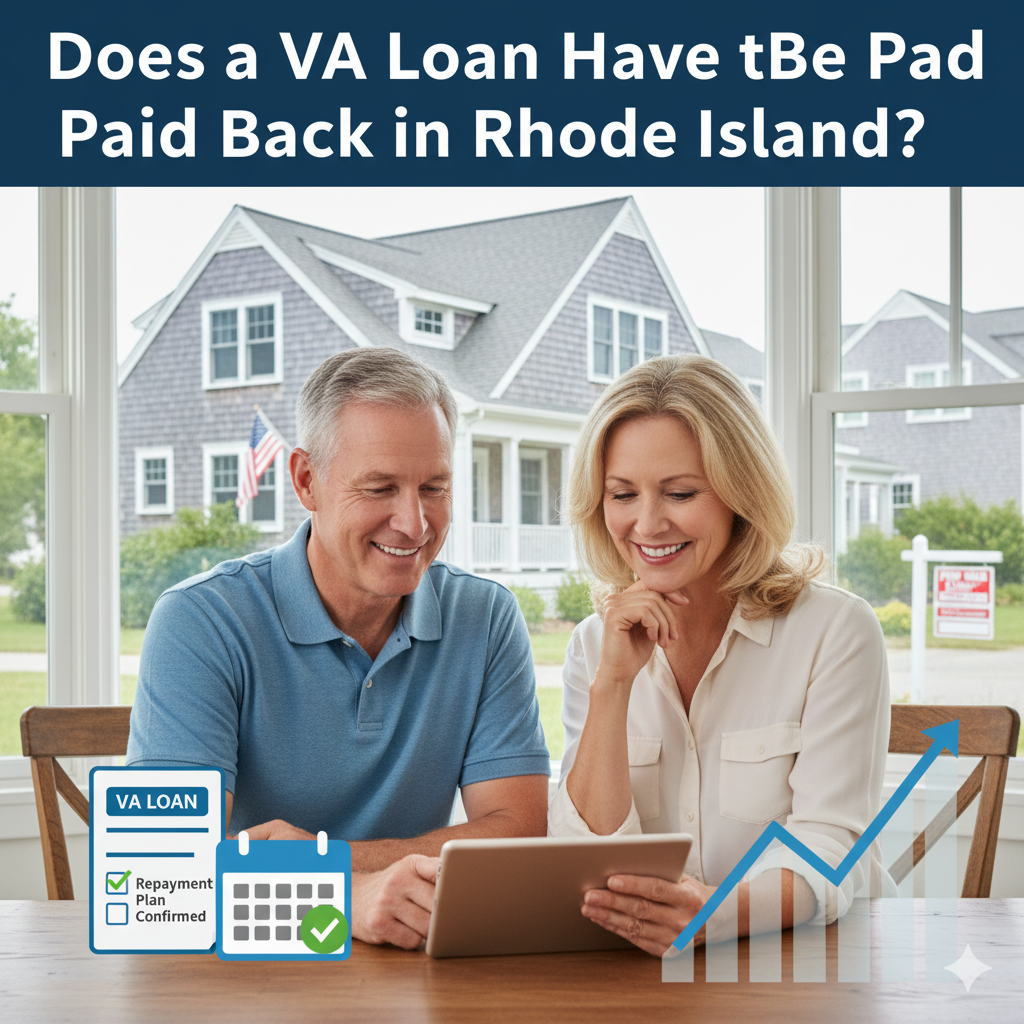
Harold Jenkins is 80. He served for several years. He lives in Bristol, Rhode Island. His wife, Agnes Murray, is 78. They bought their home with a VA loan twenty years ago. Now Harold asks: “If something happens, does a VA loan have to be paid back in Rhode Island, and what are our options?”
They don’t want drama. They want a plan. Their broker, Jonathan Boukarim at RI Mortgage Brokers, lays out options clearly. This is a new scenario — and it will show practical answers to Does a VA loan have to be paid back in Rhode Island?
What “Paid Back” Really Means
A mortgage is a promise. You borrow money. You pay it back over time. That’s universal. So, does a VA loan have to be paid back in Rhode Island? Yes. Monthly payments must be made. If you miss them, the servicer will follow standard mortgage collection routes. But the VA program adds special rules and protections in some cases.
For Harold and Agnes, repayment has been steady. But they would like to know options in case income decreases or health deteriorates. Jonathan outlines the possibilities:
- Refinance
- Assumption
- Loan modification in extreme situations
- Deed-in-lieu or foreclosure.
The VA also provides guidance and sometimes intervention in cases of hardship.
Refinance — Continue to Pay, But Alter the Conditions
Refinancing involves replacing your existing loan with a new one, probably with a lower rate or other term. It still involves the VA loan being repaid, just on new terms. Refinance — continue to pay, but alter the conditions
Why this helps:
- Lower rate means lower monthly payments.
- Shorter term means you finish sooner.
- Cash-out refinance can pull equity for other needs.
Harold considered refinancing at a lower rate to reduce monthly costs. Jonathan ran numbers and found a 15-year option that kept payments similar but reduced total interest. That’s one way the question: Does a VA loan have to be paid back in Rhode Island? becomes manageable — you still pay back, but smarter.
Assumption — Transfer The Loan, Not The Debt
A VA loan can sometimes be assumed by another buyer. In that case, the loan stays in place, but the new buyer takes over payments. This can be useful if the loan rate is lower than current market rates.
Key points:
- Not every loan is assumable without approval.
- The new borrower must usually qualify.
- The veteran’s entitlement may remain tied to the original loan until restored.
For Harold and Agnes, their home had a low VA rate. If they sell, an assumption could make the house more attractive. Again, does a VA loan have to be paid back in Rhode Island? Yes, but an assumption can pass ongoing repayment to the buyer under VA rules.
Payoff With Proceeds
Selling the house and paying off the VA loan is straightforward. The sale proceeds are used to pay the mortgage balance and any liens. This fully “pays back” the VA loan and frees entitlement if requested.
Harold and Agnes liked this option because it simplifies everything. They could move to a smaller place and use the equity. That’s the clearest way to answer: Does a VA loan have to be paid back in Rhode Island? — sell, and the loan gets repaid.
Modification or Forbearance — When Life Gets Hard
If payments become hard due to illness, job loss, or reduced income, contact the loan servicing team early. The servicer can discuss:
- Forbearance (temporary payment reduction or pause).
- Repayment plans (catch-up over time).
- Loan modification (permanent change to terms).
The VA encourages servicers to work with borrowers facing hardship. Jonathan advised Harold to document income changes and call the servicer immediately if payments slip. So, while a VA loan has to be paid back in Rhode Island, the short answer is yes; the reality is that there are safety valves to avoid default.
Deed-in-Lieu or Foreclosure — Last-Resort Paths
If nothing else works, returning the deed (deed-in-lieu) or foreclosure are final steps. These have serious credit consequences and affect future VA entitlement. But the VA often prefers alternatives that let veterans keep some dignity and avoid full legal foreclosure.
Harold wanted to avoid this with all his heart. So did Jonathan. That’s why early planning matters.
How The VA Guarantee Changes The Picture
The VA guarantee protects the mortgage investor, which lets VA loans in Rhode Island generally have better terms and no private mortgage insurance. It also affects entitlement — the amount of VA backing you have for future loans.
If a VA-backed loan defaults, the VA may pay a benefit to the investor, and that can reduce your entitlement until you restore it. That means repayment status affects your future VA loan use. In short, does a VA loan have to be paid back in Rhode Island? Yes — and repayment status affects future benefits.
Options Summary at a Glance
Option |
What it Does |
When to Use |
| Refinance | Replace the loan with new terms | Lower rate or change term |
| Assumption | Transfer payments to the buyer | Buyer wants to keep a low rate |
| Sell | Pay off the loan with the proceeds | When moving or downsizing |
| Modification | Change terms permanently | Long-term hardship |
| Forbearance | Temporary payment pause | Short-term hardship |
| Deed-in-lieu / Foreclosure | Surrender or legal repossession | Last resort |
Practical Checklist for Rhode Island Veterans
- Keep documents: COE, loan statement, tax records.
- If you struggle, call your servicer early.
- Talk to a Rhode Island VA-experienced broker (local rules and taxes matter).
- Consider refinancing if rates drop or payments rise.
- If selling, ask about assumption options to help buyers.
Harold and Agnes used this checklist. It lets them sleep better.
Final Thought
So, does a VA loan have to be paid back in Rhode Island? — The literal answer is yes. You must repay the mortgage. But the real answer is more helpful: the VA system and mortgage servicing options give you tools. You can refinance, sell, transfer, or get temporary relief. Start early. Talk to your servicer. Talk to a local VA-experienced broker who understands Rhode Island specifics.
If you want a free, no-pressure review of options tailored to your file — refinance math, assumption checks, or a repayment plan — Jonathan Boukarim at RI Mortgage Brokers can help run the numbers and explain local tax or closing implications.
FAQs
1. Does a VA loan have to be paid back in Rhode Island if I die?
Your estate or heirs are generally responsible. If the home is sold after death, the sale proceeds usually pay off the mortgage. In some cases, a spouse can assume or stay in the home.
2. Can I get the VA to forgive my mortgage?
No. The VA does not forgive mortgages. But the VA has programs and servicer guidance to help avoid default and to manage hardship.
3. What happens to entitlement if a VA loan is not fully repaid?
If a VA-backed loan results in a claim payment to an investor, your entitlement is reduced until you repay the claim or restore entitlement by paying off the loan and applying to the VA.
4. Can somebody assume my VA loan and take over payments?
Yes. VA loans can be assumable, but the assumption needs VA or servicer approval, and the new borrower usually must qualify. It’s a viable option if your rate is lower than the market.
5. Should I contact my servicer if I miss a payment?
Yes, immediately. Early contact opens up options like forbearance or repayment plans that can prevent default.
