

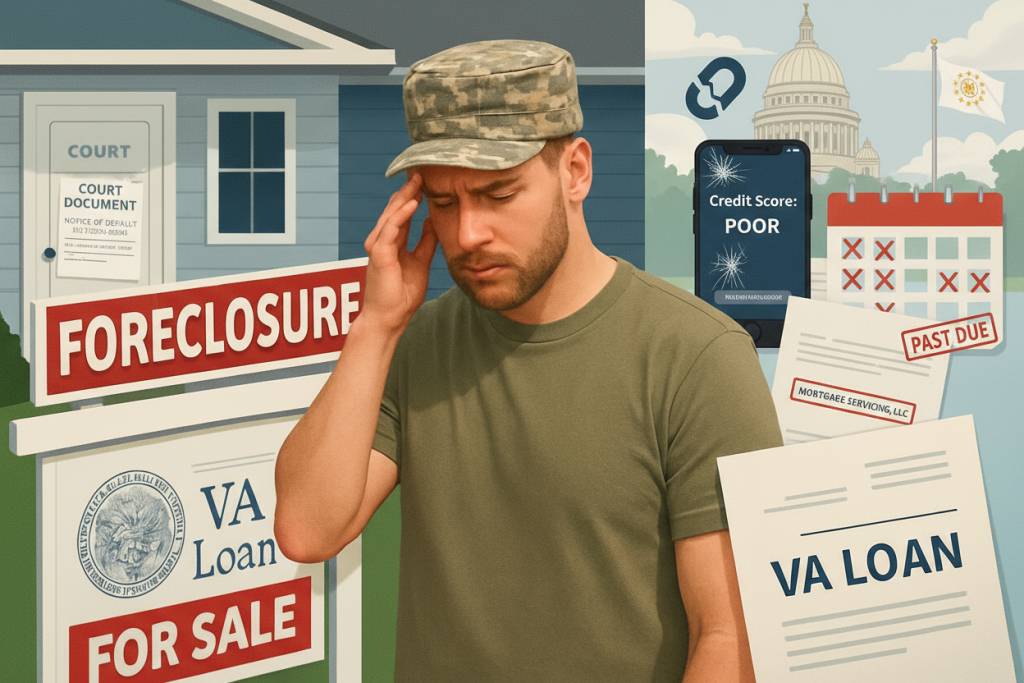
Short answer: You can stop paying, but walking away from a VA loan has serious costs. In Rhode Island, defaulting on a VA loan can lead to foreclosure, credit damage for years, possible deficiency actions, and loss of VA benefits unless you follow VA loss-mitigation rules first. Read on to learn the risks, the safe alternatives, and exactly what to do step-by-step.
To understand how VA loans work in Rhode Island, start with Are VA Loans 100% Financed in Rhode Island?
What Does “Walk Away From A VA Loan” Mean?
When human beings say “walk away from a VA loan,” they commonly suggest stopping payments on the mortgage and surrendering the residence. Practically, this results in default, after which foreclosures.
In plain phrases: if you fail to pay, the loan enters delinquency, and the servicer initiates foreclosure proceedings to reclaim the property. That manner can take months or longer in Rhode Island. However, the felony and economic effects do not quit with the keys. You can lose your home, your credit score will drop, and you may still owe money.
Foreclosures, Judicial Method & Deficiency Judgments
Rhode Island uses judicial foreclosures. In that method, the loan holder should document a lawsuit in court to foreclose. The timeline can be slower than in non-judicial states, but the court docket system ends with a sale if the borrower cannot trap up. Importantly, Rhode Island courts permit deficiency judgments in many foreclosures.
A deficiency is the distinction between what you owed and what the house sold for at auction. If a deficiency exists, the holder can ask the court to enter a cash judgment for that balance. In brief, being on foot away in RI can leave you with a court docket judgment for money owed.
Want to know what credit score you need to qualify again later? Read What Credit Score Do You Need for a Mortgage?
VA Loss-Mitigation Applications
Because VA loans are guaranteed by the Department of Veterans Affairs, VA loans require greater steps and alternatives before (or instead of) foreclosures. The VA and its servicers are required to offer loss-mitigation alternatives. These encompass:
- Forbearance (transient pause or discount in payments).
- Repayment plans (capture-up over time).
- Loan amendment (everlasting trade to loan terms).
- Compromise sale / short sale (sell the house, servicer accepts much less than owed).
- Deed as opposed to foreclosures (you signal the deed to switch the house).
These options are intended to avoid foreclosure while the borrower cooperates and while a practicable solution exists. Always speak with your VA loan broker before walking away from a VA loan.
Curious about how much money you’d need up front if you buy again? See How Much of a Down Payment Is Needed for a VA Loan in RI?
Step at the Government Level
If you have a question, “Can the government (VA) still come after you for money owed?” Then, yes. Even though the VA guarantees part of the mortgage for the servicer, the VA retains certain rights. U.S. regulations and DOJ guidance make clear that, in some cases, the VA or its assignees can pursue a borrower for a deficiency under federal rules.
That means a borrower might face collection for the unpaid balance, not only the loss of the house. The VA also keeps records of defaults, which may affect your future VA benefits. In short, a VA loan default doesn’t automatically shield you from collection actions.
If you’re unsure about VA eligibility after a default, check How to Request a VA Home Loan Certificate of Eligibility (COE)?
Credit & Long-Term Financial Consequences of Walk Away from a VA Loan
Walking away from a VA loan is rarely “clean.” Expect these outcomes:
-
Credit Score Drop
Serious delinquency and a foreclosure can cut hundreds of points from a credit score. Negative entries stay on credit reports for 7 years. This limits access to new credit, rentals, and some jobs.
-
Difficulty Getting Another VA loan
After a foreclosure, you must meet VA seasoning rules or wait failure periods (and repay any VA claim) before regaining full entitlement. That delays future VA financing.
-
Possible Deficiency Judgment
As noted, Rhode Island courts may enter money judgments for the shortfall after sale. A judgment can be enforced against wages, bank accounts, and other assets.
What Happens If You Stop Paying?
- 30 days late — you get late notices.
- 60–90 days — servicer intensifies collection calls. They may offer help.
- 120 days — servicer may issue a default/acceleration letter and begin legal steps.
- Court filing — in Rhode Island, this triggers judicial foreclosure. Expect months for the court process.
- Sale date — property sells at auction if no cure or agreement.
- Post-sale — possible foreclosure judgment and, sometimes, deficiency judgment.
Timelines vary. Importantly, VA servicers usually must consider loss-mitigation options before pursuing foreclosure. That gives you time — use it.
Alternatives to Walk Away from a VA loan in RI
If you feel overwhelmed, don’t just stop paying. Consider these safer alternatives:
-
Contact Your VA loan Servicer and The VA Immediately
The VA asks borrowers to contact the servicer and the VA early. The VA offers counseling and may direct you to loss-mitigation options. This is usually the first and best step.
-
Forbearance or Repayment Plan
If the hardship is temporary, a forbearance or a repayment plan can buy time. For example, a short forbearance reduces or pauses payments for a set time. Then you repay the missed amounts over time. This keeps your home and avoids foreclosure.
-
Loan Modification
If you need a long-term fix, a modification can change the payment, term, or interest to make payments affordable. Mods can lower monthly payments in the long run.
-
Short Sale/Compromise Sale
If you must sell, a short sale allows the home to sell for less than the mortgage balance with the servicer’s approval. It often damages credit less than foreclosure and may reduce or eliminate the deficiency in some VA cases. Discuss how the VA treats the short sale with your broker and servicer.
If you’re comparing options, here’s why VA loans save you money: What Is Private Mortgage Insurance (PMI)?
-
Deed Instead of Foreclosure (DIL)
A deed in lieu transfers the property to the servicer to avoid the time and publicity of foreclosure. It can be less damaging to credit than foreclosure in some cases. However, the VA may still record the event, and it can affect future VA benefits unless you resolve any debt to the VA.
To see how lenders evaluate your ability to afford payments, read DTI: How to Calculate It?
If You Still “Walk Away,” What Happens to Your VA Entitlement?
If you let your VA loan be foreclosed or accept a deed in lieu, your entitlement may be reduced until any VA claim is satisfied. That means you might not be able to get another VA loan with zero down until you restore entitlement.
Restoration usually requires paying the VA’s claim back in full or selling the property and paying off the loan. In short, walking away from a VA loan can block future VA zero-down benefits until you fix the past default.
Deficiency Judgments & the VA
Rhode Island permits deficiency judgments in judicial foreclosures. So the holder can seek a judgment for money owed after the sale. That exposes you to collection.
The VA’s indemnity rules and federal regulations may allow the VA or assignee to pursue deficiencies even in states with anti-deficiency laws. That means you may face a federal claim or collection action depending on your case. This is complex and fact-specific — ask a qualified attorney or your broker for help.
Stop Payments Vs Alternatives: A Short Comparison
Action |
Speed |
Credit impact |
Legal risk |
Future VA use |
| Walk away from a VA loan (stop payments) | Fast exit | Severe (7 years) | High (foreclosure + deficiency) | Often blocked until the claim is repaid |
| Forbearance | Temporary relief | Low–moderate | Low | Maintains entitlement if cured |
| Loan modification | Slow, permanent fix | Low–moderate | Low | Entitlement intact if current |
| Short sale | Medium | Moderate | Depends (may waive deficiency) | May allow reuse sooner |
| Deed in lieu | Medium | Moderate–severe | Possible deficiency/claim | May need to repay the VA claim |
Practical Steps to Take
- Don’t ignore the problem. Call your servicer and the VA right away.
- Get advice from your mortgage broker. A local RI broker knows the options and can coordinate with servicers.
- Gather paperwork. Income, expenses, bank statements, tax returns. You need these for loss mitigation.
- Ask about all VA options. Forbearance, repayment, modification, short sale, deed in lieu.
- Consult a housing counselor or attorney if collections or foreclosure papers arrive. The VA offers resources and approved housing counselors.
How Long will a Foreclosure Harm Your Credit?
Foreclosure and predominant derogatory marks remain on credit score reviews for seven years from the date of first delinquency. However, your credit score can begin improving more quickly if you rebuild with the aid of making on-time payments on other credit accounts, lowering debt, and using credit responsibly. The CFPB and credit score bureaus verify the seven-year timeframe for foreclosures.
Rhode Island VA Loan Specifics You Must Know
- Judicial foreclosure means the process moves through the court. Expect hearings and paperwork. That provides time to apply loss-mitigation steps or negotiate.
- Deficiency judgments are allowed in RI. After the sale, a deficiency suit may follow unless the servicer waives the deficiency or the VA agreement resolves it.
- Local housing programs (like RIHousing) sometimes offer help with counseling or temporary assistance — check state resources early if you face hardship.
Real Case
Mark, a veteran in Providence, lost his job. He missed three months’ payments and felt hopeless. He called his server. They approved a three-month forbearance while he found work. Later, they set a repayment plan for the missed months. He kept his home. He could have walked away, but using the VA options saved his credit and his house.
Final Thoughts
Walking away from a VA loan might feel like a shortcut. But in Rhode Island, it exposes you to court action, possible deficiency judgments, long-term credit harm, and loss of future VA benefits. Instead, act early. Call your VA loan servicer. Talk to a qualified Rhode Island mortgage broker. Explore forbearance, modification, short sale, or deed in lieu. Each option has trade-offs, but most are far gentler than a foreclosure.
If you want help sorting options, our local team specializes in VA loans and RI rules. We can review your COE, contact servicers on your behalf, and explain the best route for you and your family. Visit RI Mortgage Brokers to get local VA guidance and start a plan that avoids walking away unless it’s truly the best, informed choice.
FAQs
Can I just stop paying my VA mortgage and walk away in Rhode Island?
You can stop paying; however, doing so ends in default, judicial foreclosures, feasible deficiency judgments, and long-term credit score damage. It’s not a clean exit.
Will the VA help if I can’t pay?
Yes. The VA and VA-authorised servicers must remember loss-mitigation options along with forbearance, compensation plans, mortgage mods, short income, and deeds in lieu. Contact them early.
Can Rhode Island courts order me to pay the difference after foreclosure?
Yes. Rhode Island permits deficiency judgments after judicial foreclosures in many cases. That means a money judgment ought to comply with the sale.
How long will foreclosure live on my credit?
Foreclosure normally remains on credit score reviews for seven years from the primary delinquency. However, you may rebuild your credit score through the years with excellent behavior.
Will walking away have an effect on my destiny VA loan use?
Yes. A foreclosure or deed in lieu can reduce or block your VA entitlement till any VA declared benefit is repaid or entitlement is restored. That delays future 0-down VA loans.
